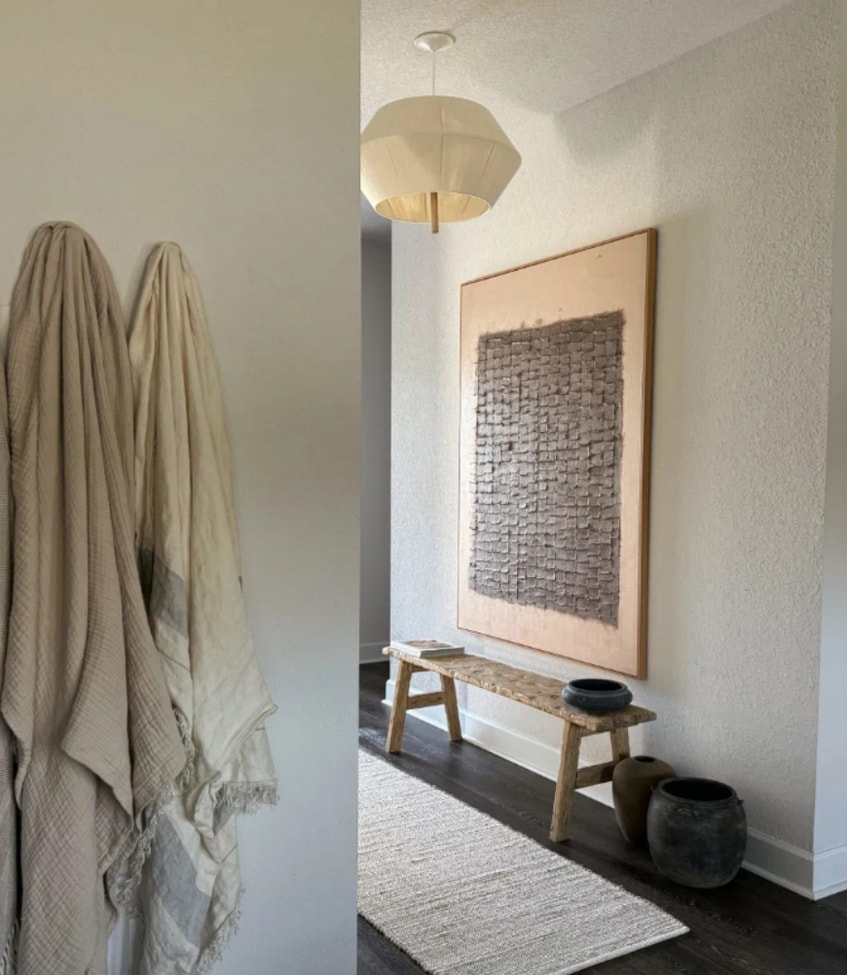
Your living room can feel warm and inviting at 2 PM, then strangely flat and uncomfortable by 8 PM. The sofa is still in place. The rug, wall color, and carefully chosen décor haven't changed. Yet once the sun goes down and the main ceiling light comes on, the room seems to lose its warmth.
Turn off the big light.
The problem may not be your décor at all. It may be the way your room is lit after sunset. Good living room lighting fixtures should preserve the depth, softness, and natural texture that make the space feel inviting during the day. That means looking beyond a single overhead fixture and combining ceiling lights, floor lamps, table lamps, wall lights, and smaller accent sources to create a more balanced glow.
Start With What Happens After Sunset
Good living room lighting ideas should begin with the room at night, not with a fixture catalog.
Wait until around the time you normally use the living room in the evening. Turn on the lights exactly as you usually would. Do not add an extra lamp just because you are testing the space.
Then stand in the doorway and look around.
Ask yourself:
Is one ceiling fixture providing almost all the light?
Can someone comfortably read on the sofa?
Do the corners of the room disappear after dark?
Can you still see the artwork and wall texture?
Does one half of the room feel noticeably darker?
Is the television the brightest object in your field of view?
If the answer to several of these is yes, you probably do not need to make the entire room brighter.
You need to move some of the light.
A single overhead source tends to illuminate from one direction. It may make the floor and horizontal surfaces bright while leaving vertical surfaces comparatively dark. It can also create strong shadows beneath brows, furniture, and shelves.
Multiple sources at different heights create smaller areas of light and shadow. Those differences are what allow a room to keep some depth after daylight disappears.
This is the basic idea behind cozy living room lighting: not maximum brightness, but controlled contrast.
Build Living Room Lighting
Before choosing another fixture, map what happens in the room.
When comparing living room lighting, start with the activities that happen in the space rather than choosing a ceiling fixture first.
A typical living room might need to handle several completely different situations:
watching television;
reading;
conversation;
entertaining;
children doing homework;
working from a laptop;
quiet evenings with very little light.
Those activities do not all need the same illumination.
A reading chair needs a task source beside or behind it. A sofa used mainly for conversation may benefit more from soft surrounding light than from a strong lamp pointed directly at the cushions.
Artwork, built-in shelves, or a fireplace can take an accent layer. The brighter general lighting can then be saved for cleaning, busy family use, or hosting.
This also makes the room more flexible.
Instead of having two settings dark and very bright you get several combinations. A floor lamp and two wall lights may be enough for an ordinary evening. Add the ceiling light when guests arrive. Use only a reading lamp when one person is awake late.
That flexibility is often what makes layered living room lighting feel comfortable.
Let Light Catch the Materials Already in the Room
Before adding more décor, look at the materials you already own.
Wood, linen, boucle, wool, stone, rattan, and other tactile finishes become more noticeable when light reaches them from the side rather than only from above.
A wood cabinet can look almost flat in a dim corner. Put a lamp nearby and the grain suddenly appears.
The same thing happens with linen upholstery. Side light picks up the weave. A textured wall creates small shadows. Woven fibers become more dimensional as light passes through or across them.
This is one reason natural-material lighting can work especially well in rooms that already use warm tactile finishes. Woven designs associated with brands such as Rowabi Lighting can contribute both another material layer and a softer visual relationship with wood, linen, rattan, or other natural textures.
But you do not need to make every fixture woven.
If the living room already contains a rattan cabinet, woven chairs, a jute rug, and several baskets, a simpler metal, ceramic, or glass lamp may provide better contrast.
Warmth comes from the relationship between surfaces, not from repeating the same natural material everywhere.
Use Warm Light Carefully
Warm living room lighting is often reduced to one piece of advice: buy warmer bulbs.
That can help, but it is not the whole answer.
A warmer bulb in one very bright ceiling fixture can still make the room feel flat. Meanwhile, several moderately warm sources placed around the room can feel much more comfortable because the lighting has depth.
Think about three things together:
the color of the light;
the brightness of each source;
where the light is coming from.
Dimming is useful for the same reason. It gives you control over intensity as the evening changes.
The room may need more light while people are eating snacks, playing a game, or tidying up. Later, the same fixtures can operate at lower levels.
A cozy room is not necessarily a dim room. The useful parts should still be easy to see.
Do Not Make the Ceiling Do All the Work
A single ceiling light can brighten a living room, but it rarely creates the warm, layered feel you want in the evening. Bringing light closer to eye level with table lamps, floor lamps, and wall sconces makes the room feel softer and more inviting.
Wall sconces are especially useful for illuminating dark corners, highlighting artwork, or adding light behind a sofa without taking up floor or table space. If your walls feel too dark after sunset, explore different wall sconces for living rooms to find a style that suits your space.
Think about where the light is needed before choosing a fixture. A sconce beside artwork adds a decorative touch, while one near a reading chair provides more practical lighting. The goal is to fill the darker areas with a gentle glow rather than relying on one bright overhead light.
You Can Create Living Room Lighting Without an Overhead Light
Some living rooms have no central ceiling fixture at all. That is not necessarily a disadvantage.
It simply means the room needs to build its general illumination from several sources instead of one.
A practical combination might include:
a tall floor lamp providing broader ambient light;
a reading lamp beside the main chair or sofa;
wall sconces or plug-in wall lights adding perimeter light;
a smaller table lamp on a console;
accent lighting around shelving or artwork.
The mistake is trying to compensate for the missing ceiling fixture with one extremely bright floor lamp.
That simply recreates the same one-source problem from a different height.
Spread the light around instead.
Keep the Television From Becoming the Brightest Thing in the Room
If the television is the brightest object you see after dark, the surrounding room may be too dim.
This creates a strong contrast between the screen and everything around it, which can also make the living room feel visually colder.
You do not need a lamp pointed at the television.
Instead, add soft light somewhere else within the field of view: a lamp beside the sofa, low light on nearby shelving, or gentle wall illumination away from the screen.
Keep strong bulbs and obvious reflections out of the television itself. The objective is not to compete with the screen. It is to stop the rest of the room from disappearing around it.
Some areas can stay quieter.
You may want the conversation area gently illuminated while a distant corner falls into softer shadow. A fireplace might receive more visual emphasis than an empty wall. Artwork can stand out while the ceiling remains relatively subdued.
This difference between brighter and darker areas gives the room hierarchy. Think of it less like illuminating a store and more like deciding what should be noticed tonight.
Try the 8 PM Test Before Buying Another Lamp
Before purchasing another fixture, spend one evening testing what the room already has.
Turn off the overhead light. See what remains usable without it.
Turn on your existing lamps. Do not move them yet.
Sit in every seat you normally use. Check reading light, conversation areas, and glare.
Identify dark functional areas. A chair you actually use needs priority over an empty corner.
Look for dark walls. Artwork, shelving, or textured surfaces may need a mid-height source nearby.
Move an existing lamp if possible. You may have enough fixtures but poor placement.
Check screen and window reflections. A good lamp position should not introduce a new glare problem.
Only then decide what is missing. Add a task, wall, or ambient source for a specific reason.
This test helps separate a lighting problem from a decorating problem.
You may discover that the room does not need another rug, different paint, or six more cushions. It simply needs a lamp moved from the corner to the reading chair.
Warm the Room With Placement
A living room that feels cold at night is not necessarily missing warm colors or soft furnishings.
It may simply be losing all of its depth when daylight disappears.
Give the ceiling light less responsibility. Put task light beside the activities that need it. Bring some illumination onto the walls. Let light catch the wood, fabric, artwork, and texture that already make the room feel good during the day.
And leave enough shadow for those brighter areas to matter.
A warmer living room rarely comes from making every corner brighter. It comes from putting softer light where people, walls, and materials can actually use it.