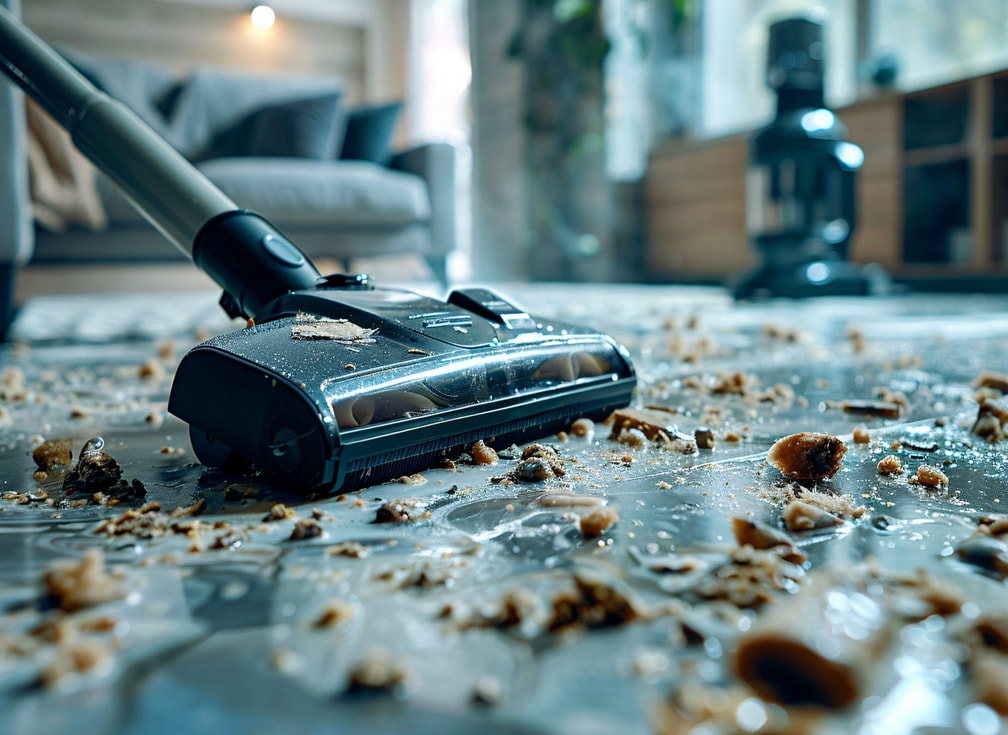
Demo day is exciting right up until you find drywall dust worked into your living room carpet three rooms away from the demo zone. Renovation debris doesn't stay where you put it. It migrates. The homeowners who come out of a remodel with clean floors aren't lucky; they planned ahead.
Here's exactly how to protect your floors at every stage, and what to do when the dust finally settles.
Pull It Up or Cover It? The First Decision You'll Make
Before work starts, decide whether the carpet stays down or comes up. If you're replacing the flooring anyway, or the job involves heavy demo like concrete grinding or drywall demolition, pull it up. There's no point protecting something destined for the dumpster.
Covering in place works for shorter, contained projects: painting, trim work, finish carpentry. The more trades involved and the longer the timeline, the stronger the case for removal. Still sorting out scope? The key questions to ask before any major home project are worth working through first.
Room-by-Room Protection Strategies
Not all renovations create the same kind of mess. The room being worked on determines the type of debris, and the type of debris determines how aggressive your protection strategy needs to be.
Kitchen Gut Jobs
A full kitchen demo is one of the highest debris-risk projects you can take on. Tile demolition, cabinet removal, and subfloor work all generate debris that gets tracked into adjacent carpet before anyone notices.
A dust barrier at the doorway is non-negotiable; a zip-wall or weighted plastic sheeting keeps fine particulates contained. Pay special attention to subfloor adhesive and grout haze.
Both bond to carpet fibers on contact and won't release to vacuuming once dry. Treat any tracked residue immediately with a damp cloth and cold water.
Bathroom Tile Work
Tile saws produce an ultra-fine silica dust that travels farther than most homeowners expect. Set up cutting stations outside or in the garage whenever possible. If that's not an option, seal the bathroom doorway with plastic sheeting before any cutting begins.
Run a carpet runner from the bathroom entrance to the exterior exit point. Grout, thin-set, and tile adhesive all get picked up by boot soles and deposited on whatever floor the crew walks across next. A runner shaken out or replaced mid-project is much cheaper than a carpet cleaning emergency.
Painting Projects
Painting feels low-risk compared to demo work. It shouldn't. Sprayer overspray can put a fine mist of finish-coat paint onto carpet in an adjacent room through a doorway you thought was closed. Mask off adjoining spaces before any sprayer work begins.
Choose canvas or rosin paper drop cloths over plastic sheeting; plastic traps moisture and creates a slip hazard. One more thing worth knowing: latex paint is water-soluble when wet. A quick blot handles most drips immediately. Once it dries, hot water extraction is your only real option. Catch spills fast.
Flooring Installation in Adjacent Rooms
Installing hardwood, laminate, or LVP next to existing carpet creates a debris issue that's easy to overlook. Miter saw and nailer dust is extremely fine, the kind that drifts rather than drops.
Pay close attention to transition zones where new hard flooring meets carpet. That seam collects sawdust, adhesive residue, and installation debris. Cover the carpet side of the transition with rosin paper taped in place before work begins, and check it daily throughout the install.
Mid-Renovation Maintenance: Keeping Debris Contained
Protection measures set up on day one don't stay effective through week three. Dust barriers shift. Runners get kicked aside. The same habits that drive a successful construction project keep debris contained: clear boundaries, consistent enforcement, and daily upkeep.
Station a boot scraper or disposable shoe covers at every zone entry point. Dry vacuum high-traffic transition areas daily throughout the job, not just at the end. Fine particulates become significantly harder to remove the longer they sit in carpet fibers.
If you notice debris migrating into a living area, address it the same day. Small accumulations are manageable. Weeks of compacted debris are not.
Post-Renovation Cleanup: Why Vacuuming Alone Isn't Enough
The remodel is done. The crew is out. You run a vacuum over the carpet and it looks fine.
It isn't, not entirely.
What Renovation Residue Actually Does to Carpet Fibers
Renovation debris embeds deeper than everyday dust. As Lowe's notes in its drywall dust cleaning guide, drywall contains gypsum, silica, and mica particles that penetrate well below the surface layer. Left in carpet fibers, those particles act like fine sandpaper with every step.
Adhesive residue attracts and holds soil. Grout haze bonds mechanically to fibers and won't release to surface cleaning. Construction dust is also electrostatically charged, so it clings rather than sits, grinding against fiber strands with every pass of foot traffic.
Why a Vacuum Can't Finish the Job
A standard vacuum removes what's visible on the surface. It doesn't reach what has settled to the base of the pile, which is where the most damaging renovation residue ends up. Hot water extraction forces heated water and cleaning solution deep into the fiber structure and pulls embedded particulates back out. It's the only method that clears residue from the full depth of the carpet.
Just as pressure washing outperforms traditional scrubbing for post-renovation exterior surfaces, professional extraction is the indoor equivalent.
When to Schedule the Professional Clean
Book it after the last trade is out and before furniture goes back in. That way you're assessing the finished space with actually clean floors, not floors that look clean from a distance. Carpet Cleaning Lehigh Valley offers residential carpet cleaning suited for exactly this situation, where surface cleaning is already done but embedded renovation residue remains.
Your Floors Can Come Out of a Remodel Looking Just as Good as They Went In
A renovation is a significant investment. Most homeowners protect their new countertops and fresh paint carefully while the floors that take the most daily abuse get treated as an afterthought.
A room-by-room protection strategy, consistent debris containment during the job, and one professional deep clean at the end gets you to the finish line with floors that match the rest of the remodel.